
Living as a Digital Nomad in Italy can look like the perfect remote-work lifestyle: morning coffee at the local bar, a few hours of work, lunch at a neighbourhood trattoria, historic streets outside your door and completely different destinations available for the weekend.
And sometimes, it really is that good.
But living in Italy is very different from spending two weeks here on holiday. Bureaucracy can be frustrating, public services vary significantly between regions, English is not universally spoken and finding flexible accommodation in the most popular cities can be expensive.
At the same time, Italy offers something that is difficult to quantify through cost-of-living rankings: an extremely high quality of everyday life. Food, public spaces, culture and social interaction are deeply embedded in daily routines.
The experience of being a Digital Nomad in Italy, however, depends enormously on where you decide to live.
Where Should a Digital Nomad in Italy Live?
There is no single “best” destination because Italy offers radically different lifestyles within the same country.
Milan is the obvious choice for people who want international business connections, startup events, coworking spaces and a large professional network. Rome offers an even bigger city experience combined with extraordinary history and a significant international population. Florence attracts creatives, students and international residents, while Bologna combines a strong university culture with excellent transport connections and a more manageable size.
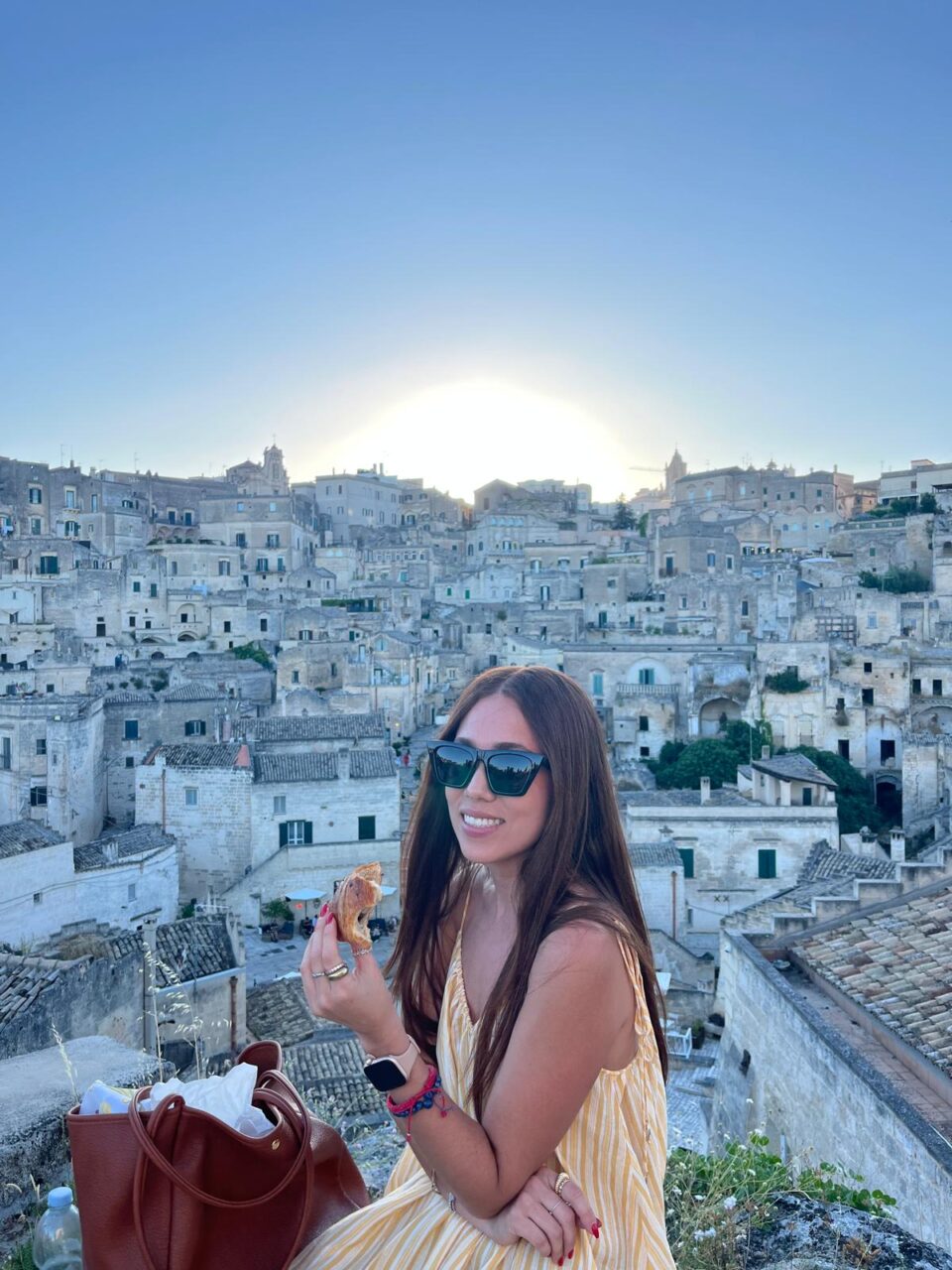
Southern Italy provides a completely different experience. Cities such as Bari, Lecce, Naples and Palermo generally offer lower costs and warmer weather, while places such as Matera and the villages of Basilicata provide the opportunity to experience a slower and much more locally integrated lifestyle.
We explored these differences in our guide to the best cities in Italy for digital nomads, comparing destinations according to costs, connectivity, lifestyle and community.
For a Digital Nomad in Italy, choosing the right destination is probably more important than choosing the most famous one.
Cost of Living as a Digital Nomad in Italy
Italy is neither extremely cheap nor prohibitively expensive. The biggest factor is geography.
Living in Milan can easily require €2,000–€2,500 or more per month once rent, food, transport and entertainment are included. Rome and Florence are slightly cheaper but accommodation remains expensive, particularly in central areas.
Moving south changes the equation considerably. Bari, Lecce, Palermo, Matera and smaller towns can offer a comfortable lifestyle at a significantly lower monthly cost.
Accommodation is usually the biggest challenge for nomads. Traditional rental contracts are often designed for long-term residents, while Airbnb and other short-term platforms can become expensive for monthly stays.
This is one reason Colivings Italy experiences are increasingly interesting for remote workers: accommodation, workspace, internet and community are bundled into one experience, reducing much of the friction involved in moving somewhere new.
Getting Around Italy: Trains, Cars and Public Transport
One of the biggest advantages of living in Italy is the possibility of exploring an enormous variety of destinations without flying.
The high-speed railway network makes travelling between major cities particularly easy. Milan, Bologna, Florence, Rome and Naples are connected by frequent high-speed services, making weekend trips realistic even without a car.
Regional trains extend this network to smaller destinations, although reliability and frequency can vary considerably.
Inside major cities, public transportation is generally sufficient for everyday life. Milan has an extensive metro, tram and bus network, while Rome combines metro, buses and trams. Bologna and Florence are compact enough that walking and cycling are often the easiest options.
The situation changes in rural Italy. In Basilicata, Puglia, Calabria and other less densely populated areas, a car can significantly improve your experience. Public transportation exists, but schedules may not provide the flexibility remote workers expect.
For a Digital Nomad in Italy interested in rural living, this is an important factor to consider before choosing a destination.
Food: One of the Biggest Advantages of Living in Italy
Food is one of the areas where daily life in Italy genuinely lives up to expectations.
But the biggest advantage is not necessarily eating at restaurants every night. It is the accessibility of good food as part of ordinary life.
Local markets, bakeries, family-run restaurants and independent food shops remain common throughout the country. Regional differences are also enormous: living in Sicily produces a completely different food experience from living in Emilia-Romagna, Tuscany or Basilicata.
Eating locally can also be surprisingly affordable. Avoiding restaurants designed primarily for tourists and following local habits can dramatically reduce your food budget.
Food also plays an important social role. Aperitivo, long dinners and shared Sunday lunches are not simply about eating. They are some of the main environments where relationships develop.
For digital nomads trying to integrate into Italian life, accepting an invitation to dinner can sometimes be more valuable than attending another networking event.
Where Are the Biggest Expat and Digital Nomad Communities?
If meeting other international people is a priority, the major cities remain the easiest starting point.
Milan has perhaps the strongest international professional ecosystem, particularly among people working in technology, finance, consulting, fashion and startups. Rome has a large and diverse expat population, while Florence attracts international students, creatives and long-term foreign residents.
Bologna has a younger international environment because of its university, while cities such as Palermo, Bari and Lecce have smaller but increasingly visible remote-work communities.
You can find these communities through Facebook groups, Meetup, coworking spaces, WhatsApp groups, language exchanges and international events. The Digital Nomads Italy Facebook community is another useful place to connect with people already living around the country and ask practical questions about accommodation, visas and everyday life.
Smaller destinations work differently. You may find fewer international residents, but the relationships you build can become considerably deeper.
Social Life: Will You Actually Meet People?
Loneliness is one of the most underestimated challenges of digital nomadism.
Moving to Rome or Florence does not automatically mean finding friends. Large cities provide opportunities, but you still need to actively build your network.
Language exchanges, coworking events, sports clubs, international meetups and aperitivo gatherings are common ways to meet people. Learning even basic Italian can also completely change your social experience.
In smaller towns, the dynamic is almost the opposite. There may be fewer organized events, but repeated everyday interactions make it easier to become recognizable within the community.
This is where Colivings Italy can make a major difference. Instead of building a social circle from zero, you arrive within an existing group.
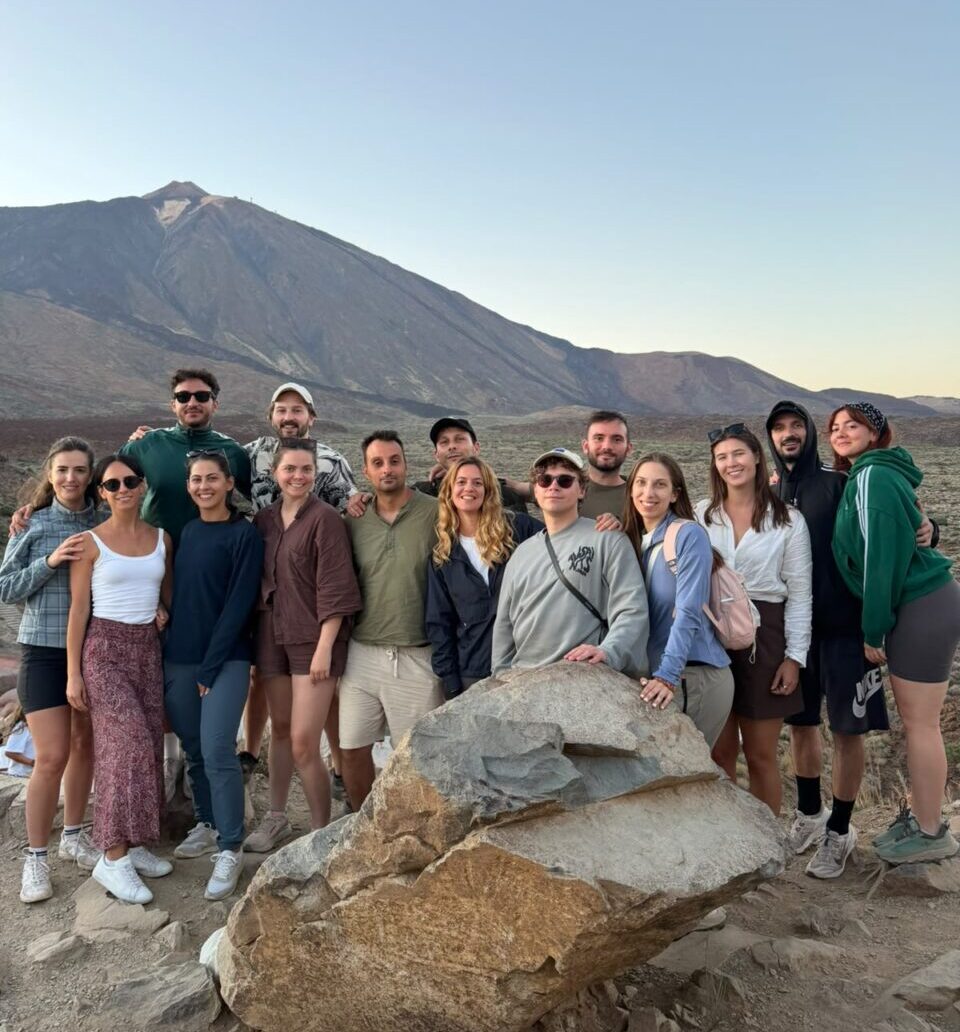
At Tursi Digital Nomads, we have seen people arrive alone and quickly find themselves sharing dinners, weekend trips and working days with people from completely different countries. Over time, those communities have generated friendships, professional collaborations and relationships that continued long after the coliving experience ended.
What Is the Weather Like for Digital Nomads in Italy?
Italy’s climate varies much more than many international visitors expect.
Northern Italy has cold winters and hot, sometimes humid summers. Milan and Bologna can exceed 30°C during July and August, while winter temperatures can approach freezing.
Central Italy is generally milder. Rome and Florence have relatively comfortable winters, although summers can become extremely hot.
Southern Italy and the islands offer some of the country’s best conditions for people seeking warmer weather. Puglia, Basilicata, Calabria, Sicily and Sardinia generally experience mild winters and long summers.
For remote workers, spring and autumn are arguably the best seasons. April to June and September to October combine comfortable temperatures with fewer tourists and, in many destinations, lower accommodation prices.
Internet, Coworking and Everyday Remote Work
Internet connectivity in Italy has improved significantly, particularly in cities. Fiber connections are common in major urban areas and 4G/5G coverage provides a useful backup.
However, never assume that a beautiful apartment in an ancient Italian village automatically has excellent WiFi.
If your work involves daily video calls, large file transfers or other bandwidth-intensive activities, verify connection speeds before booking.
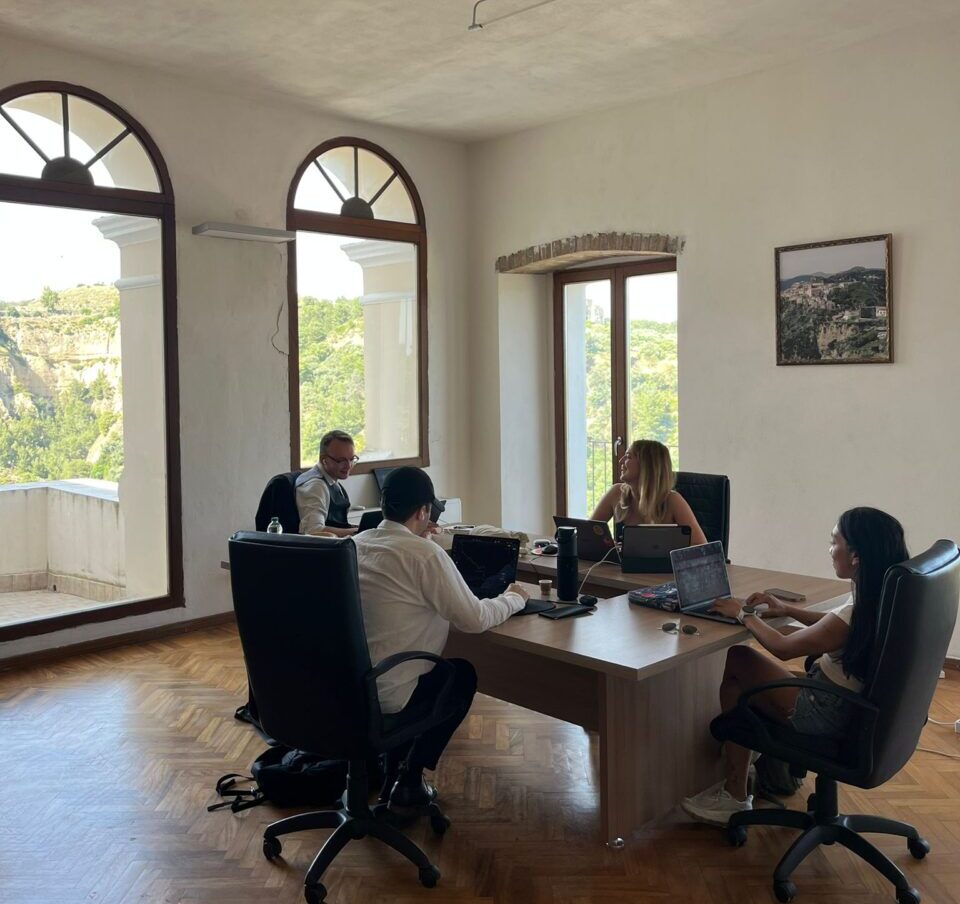
Coworking spaces are widely available in Milan, Rome, Florence, Bologna and other major cities. In smaller destinations, dedicated spaces are less common, making coliving and community-led coworking hubs particularly valuable.
Reliable infrastructure is therefore another reason why Colivings Italy can be an attractive option for people who want to explore rural or southern destinations without compromising their work.
Language: Can You Live in Italy Without Speaking Italian?
Yes, but your experience will depend on where you live.
In Milan, Rome, Florence and heavily touristic areas, it is relatively easy to manage everyday life in English. Younger Italians are also generally more comfortable speaking English.
Outside those environments, Italian becomes considerably more useful.
You can survive without speaking Italian, but learning even a basic level makes daily life easier and, more importantly, allows you to build relationships beyond the international bubble.
Ordering coffee, chatting with your neighbour or speaking with the owner of a local shop may seem insignificant, but these interactions are often what transform living abroad into actually feeling part of a place.
Bureaucracy: The Less Romantic Side of Living in Italy
This is where the honest part of the guide becomes important.
Italian bureaucracy can be confusing.
Depending on your nationality and length of stay, you may need to deal with visas, residence permits, the Codice Fiscale, registration procedures, healthcare and taxation.
Non-EU remote workers considering a longer stay should research the Italian Digital Nomad Visa before moving, while EU citizens have a significantly easier process thanks to freedom of movement.
Do not leave these questions until after arrival. Visa status and tax residency are different issues, and spending a significant portion of the year in Italy can have tax consequences.
Preparation makes the Italian experience considerably easier.
Is Italy Safe for Digital Nomads?
Italy is generally a safe destination for remote workers, including solo travelers.
The most common problems visitors encounter are petty theft and pickpocketing, particularly around major railway stations, crowded public transportation and tourist attractions in large cities.
Normal precautions are usually sufficient: keep valuables secure, pay attention in crowded areas and research neighbourhoods before choosing accommodation.
Smaller towns and rural destinations often provide a particularly relaxed environment where walking around and interacting with the local community becomes part of everyday life.
Big Cities or Rural Italy: Which Is Better?
This is ultimately one of the most important decisions.
Big cities provide more coworking spaces, nightlife, expat communities, public transportation and professional networking. They are easier for a first-time Digital Nomad in Italy because almost everything you need already exists.
Small towns provide something different: space, affordability, authenticity and stronger interaction with local communities.
You sacrifice some convenience, but you gain a lifestyle that can be difficult to experience in Europe’s major digital nomad hubs.
This is particularly relevant in Southern Italy, where remote work can allow international professionals to experience places traditionally overlooked by long-term international residents.
Is Being a Digital Nomad in Italy Actually Worth It?
Italy is not necessarily the easiest digital nomad destination in Europe.
Some bureaucracy is unnecessarily complicated. Flexible accommodation can be difficult to find. English is less widespread outside major destinations, and transport becomes weaker as you move into rural areas.
But focusing only on convenience misses much of what makes Italy special.
Being a Digital Nomad in Italy means integrating work into a lifestyle built around public spaces, food, culture, relationships and an extraordinary diversity of destinations.
You can spend several months in Milan building professional connections, move south to Puglia for the coast, spend a month working from Matera and then experience village life in Basilicata — all without leaving the country.
And if you move beyond the obvious destinations, Italy can still provide something increasingly difficult to find in established nomad hotspots: the feeling that you are actually living somewhere rather than simply consuming another destination.
Choosing Your Life as a Digital Nomad in Italy
There is no single version of the Italian digital nomad experience.
If professional networking is your priority, Milan might be your place. If you want culture and international life, consider Rome or Florence. Bologna offers balance, while Bari, Lecce and Palermo combine lower costs with the lifestyle of Southern Italy.
And if what you are really looking for is community, authenticity and a slower rhythm, destinations such as Matera, Tursi and other smaller towns can offer an entirely different experience.
For many people, the easiest way to discover that side of the country is through Colivings Italy, where accommodation, coworking and community are already organized.
Ultimately, living as a Digital Nomad in Italy is less about finding the objectively “best” city and more about deciding what kind of everyday life you want to build.
And that may be Italy’s biggest advantage: you have an extraordinary number of different answers to choose from.