
The best cities in Italy for digital nomads are Milan, Florence, Rome, Bologna and Bari for infrastructure and connectivity, plus authentic southern spots like Matera and the villages of Basilicata for lower costs and real community. The right choice depends on your budget, your need for fast internet, and whether you want a big city or a slower, more local pace.
Italy has become one of the most rewarding places in the world to work remotely, and digital nomad Italy is booming, especially since the country launched its digital nomad visa in 2024. But most guides send you to the same five big cities. This guide covers those, and then goes further. It takes you to the authentic south, where the cost of living is lower, the culture runs deeper, and coliving makes it easy to arrive alone and build a community fast.
What makes a city good for Digital Nomads in Italy?
A city works for remote work in Italy when the internet is fast enough for video calls, the cost of living fits your income, and daily life feels good rather than draining. Add coworking spaces, decent train links and other remote workers to meet, and a good city becomes a great base.
Keep these five factors in mind as you read:
● Internet , fiber or reliable 4G/5G for video calls
● Cost of living , rent, food and transport against your remote income
● Coworking and community , spaces to work and people to meet
● Connectivity , trains and airports for weekend travel
● Lifestyle , the pace and culture that keep you productive
The best cities in Italy for Digital Nomads (2026)
Here are the best-known cities for remote work in Italy, from the biggest hubs to the affordable south. Before the big names, though, here’s where we host our own community, in case you already know you want the authentic-south experience.
Our coliving destinations in the South
If community and authenticity matter more to you than big-city scale, start here. These are the southern bases where Tursi Digital Nomads runs coliving spaces, with coworking, private rooms and a ready-made community, so you can arrive alone and settle in fast.
● Matera , live beside the ancient Sassi, a UNESCO city carved from stone, with a coworking space and a low cost of living. See our coliving in matera.
● Basilicata (Tursi) , the authentic inland village life beyond matera, in one of Italy’s least touristy regions. Explore our coliving in basilicata.
Prefer to see the full picture first? The best-known cities for digital nomads in Italy are below.
Milan, business, networks and opportunity
Milan is the best city in Italy for digital nomads who prioritise career growth and international networking. It has the country’s strongest coworking scene and fast fiber, and business gets done in English. It’s also the most expensive option, with a mid-range budget around €2,300 a month for one person. If you want access and ambition, Milan delivers.
Florence, walkable, creative, balanced
Florence suits digital nomads who value lifestyle over scale. It’s compact and walkable, full of creative energy, with solid WiFi and coworking cafés. The pace is slower than Milan’s, the art is everywhere, and a mid-range budget sits around €1,900 a month. It’s a favourite for those who want inspiration without a big-city grind.
Rome , energy and culture at scale
Rome offers daily immersion in history with the infrastructure to back it up. It has a large expat and nomad community, coworking across many neighbourhoods and a major international airport. It can feel chaotic, but central districts have reliable fiber. Budget around €2,000 a month for one person. Rome rewards nomads who want scale and visibility.
Bologna , balanced and affordable
Bologna is often overlooked, yet it’s one of the best places to work remotely in Italy. A university city with international culture, excellent train links and a famous food scene, it’s noticeably cheaper than Milan or Rome, at roughly €1,650 a month. It’s organised and walkable, and easy to settle into.
Bari , the coastal south
Bari is the southern alternative for nomads who prioritise cost and a coastal lifestyle. Rents are lower, winters are warmer and the digital community is growing. A mid-range budget runs around €1,300 a month. It’s one of the most financially sustainable options on this list, and a gateway to the deeper south.
More Italian cities worth considering
Beyond the big five, several more of the best cities in Italy for digital nomads offer strong remote-work conditions with their own character. These are ideal if you want somewhere a little less obvious.
Turin , affordable northern hub
Turin combines northern infrastructure with prices lower than Milan’s. It has elegant architecture, a growing startup scene and excellent transport links to the Alps and France. A mid-range budget sits around €1,700 a month, making it a smart pick for nomads who want the north without Milan’s cost.
Naples , intensity and low cost
Naples is loud and historic, and one of the most affordable major cities in Italy at roughly €1,400 a month. Internet has improved across central areas, and the food and coastal access are unmatched. It suits nomads who want energy and authenticity over polish.
Lecce , the “Florence of the South”
Lecce, in Puglia, is all baroque architecture and slow rhythm, with a low cost of living around €1,350 a month. It’s warm and walkable, and more and more remote workers are choosing it for the southern feel with enough infrastructure to work comfortably.
Palermo , Sicilian culture and value
Palermo offers rich Sicilian culture, sea access and some of the lowest costs in urban Italy, near €1,300 a month. Connectivity is improving and the coworking scene is small but growing. It’s a strong choice for nomads drawn to island life and deep cultural immersion.
The best authentic south: where most nomads never look
When people list the best cities in Italy for digital nomads, they almost always stop at the big five. But the cheapest and most authentic options, the ones with real community, are further south in basilicata and its villages, where costs drop and daily life feels genuinely local.
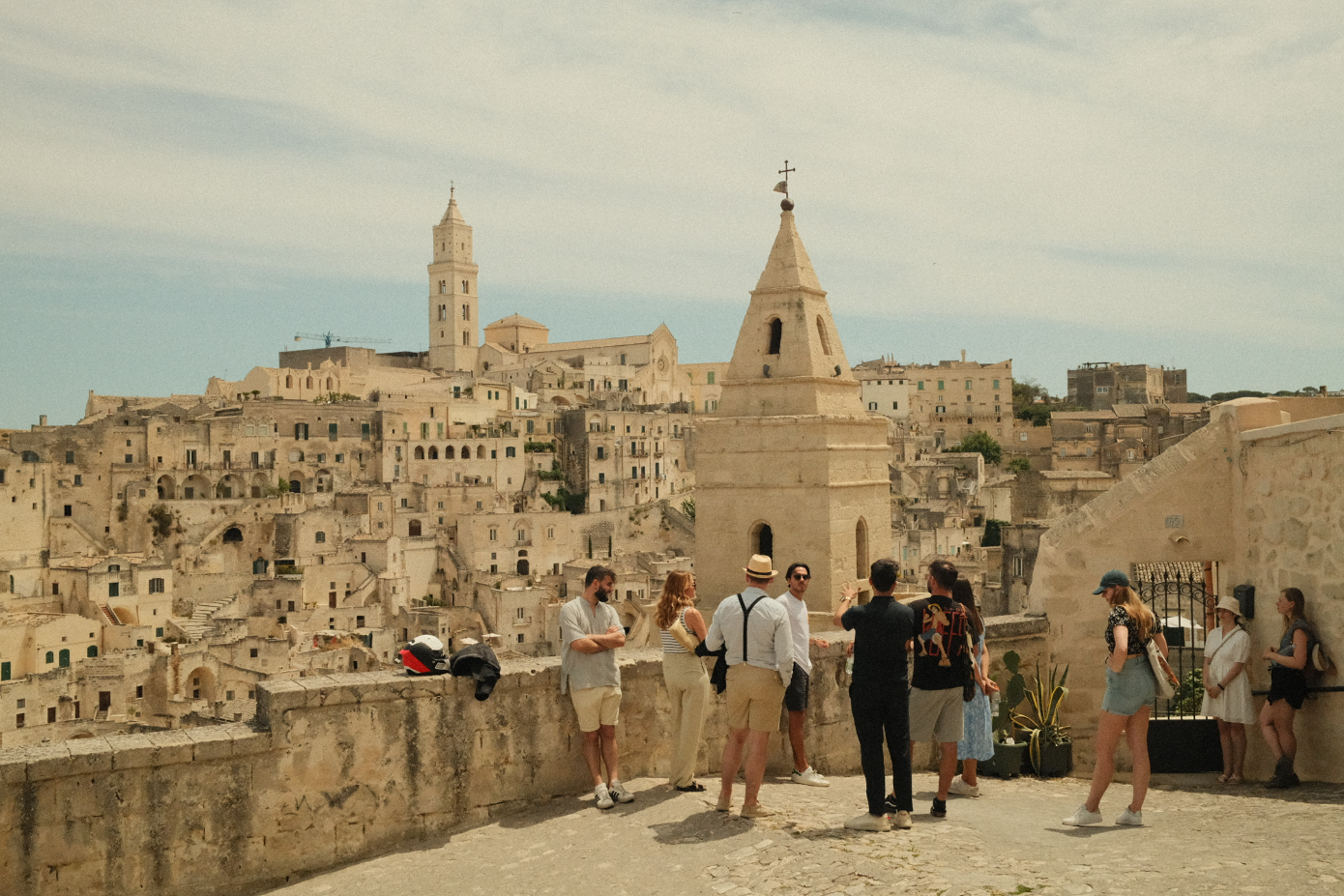
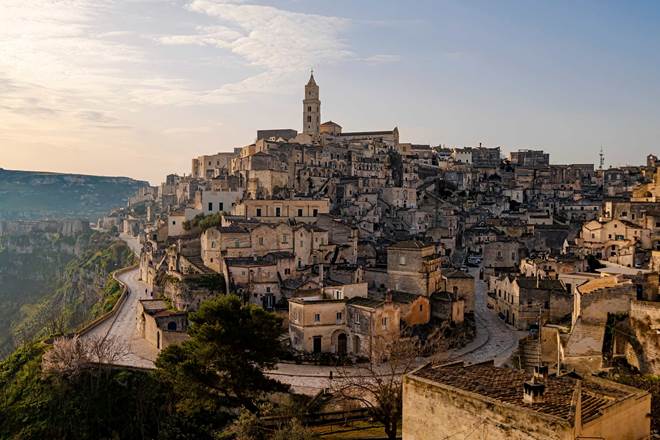
Matera , living in the ancient Sassi
matera is one of the oldest continuously inhabited cities in the world, famous for its cave dwellings, the Sassi, now a UNESCO World Heritage Site. For remote workers it offers a striking place to live, a low cost of living, and a growing coliving scene. It’s ideal if you want somewhere beautiful and affordable that still feels undiscovered. Tursi Digital Nomads runs a coliving in matera with a coworking space and a ready-made community, so you can settle in from day one.
Live and work in matera → Book an introductory call
Tursi and the villages of Basilicata
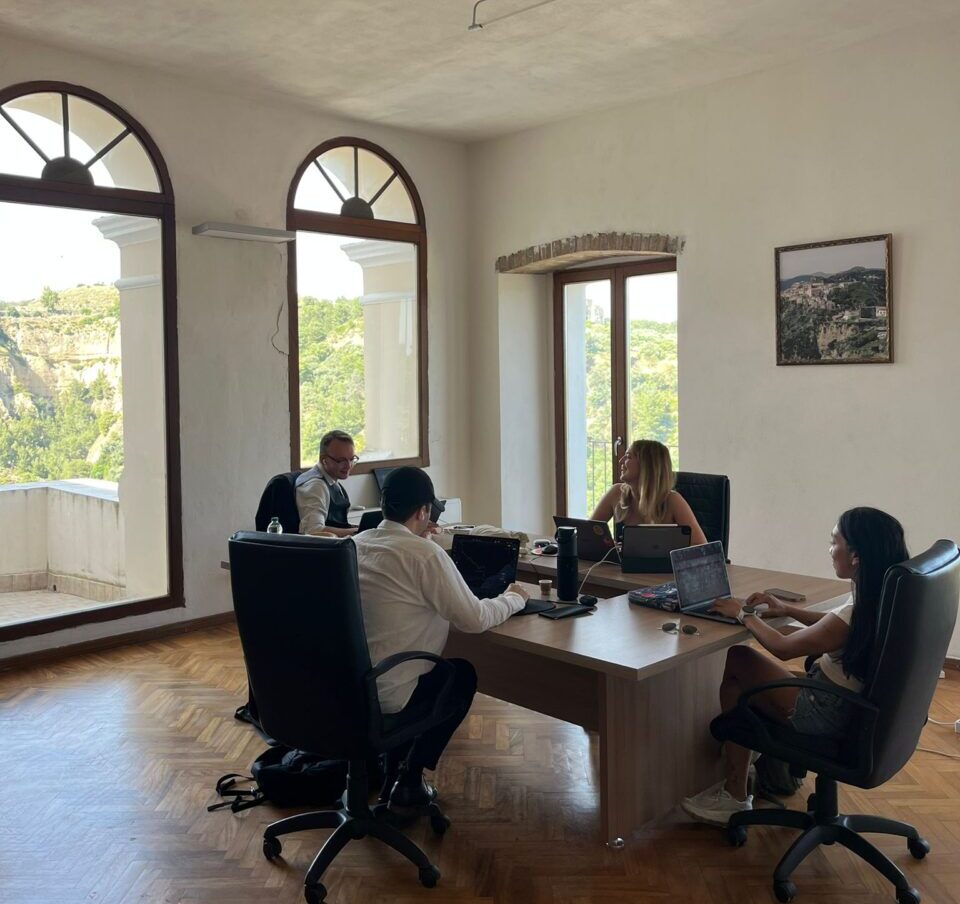
Beyond matera, the villages of basilicata are the region’s real hidden layer. Places like Tursi offer authentic hilltop life, some of the lowest costs in the country, and a repopulation movement that welcomes remote workers. This is where coliving matters most: it removes the friction of settling into a small village alone. Our coliving in basilicata is based right here in Tursi, with private rooms, a coworking space in a former monastery and a community that returns year after year.
Live and work in Tursi, basilicata → Book an introductory call
Why the authentic South beats the big cities for many nomads
Among the best cities in Italy for digital nomads, the south is winning over more and more remote workers on cost, community and the feeling of actually living somewhere real. You give up nightlife and big-city networking. You get lower rents, warmer weather, real local relationships and a slower pace that protects your focus. If your work is already remote and your priority is quality of life, the south is hard to beat.
How coliving makes the authentic south easy
For digital nomad Italy newcomers, coliving is the simplest way to base yourself in southern Italy, especially in a small town. Instead of hunting for an apartment, arranging internet and building a social circle from scratch, you join a ready-made community with coworking in Italy, private rooms and organised activities. You arrive alone and, within days, you have a group.
For the authentic south, coliving solves the two hardest problems: infrastructure and loneliness. If you’re drawn to basilicata but worried about the logistics of village life, this is the answer. Explore coliving in the south of Italy with Tursi Digital Nomads, with destinations in Matera, Basilicata and across the south.
Internet and connectivity for remote work in Italy
Reliable internet is non-negotiable for remote work in Italy, and the country has improved fast. Major cities offer fiber connections of 100 Mbps to 1 Gbps, more than enough for video calls and heavy uploads. Coworking spaces in Italy guarantee stable speeds and backup connections, which is why many nomads work from them rather than relying on apartment WiFi alone.
For mobile data, an Italian or European eSIM keeps you connected on the move, with providers offering large monthly data plans at low cost. In rural areas and small villages, speeds vary, so coworking spaces and colivings with guaranteed high-speed internet become the safest option for uninterrupted work.
How to choose among the best cities in Italy for Digital Domads
The right city depends on your priorities. Use this quick guide to match your profile to a base:
● First time in Italy , Florence or Bologna: walkable, easy to navigate and quick to feel at home in
● Career and networking , Milan or Rome: the biggest ecosystems and connections
● Tight budget , Bari, Naples, Lecce or the basilicata villages: the lowest costs
● Community over nightlife , matera, Tursi and the south: coliving and real local life
● Warm weather year-round , the south and Sicily: Bari, Lecce, Palermo
If you’re unsure, start in a coliving. You get the infrastructure and the community from day one, plus local people who show you around, so you can figure out where in Italy you actually want to be. Explore our colivings in Italy to see how it works.
Cost of living comparison
Here’s a quick mid-range snapshot for one person per month, so you can compare the best cities in Italy for digital nomads at a glance:
● Milan , around €2,300
● Rome , around €2,000
● Florence , around €1,900
● Turin , around €1,700
● Bologna , around €1,650
● Naples , around €1,400
● Lecce , around €1,350
● Bari , around €1,300
● Palermo , around €1,300
● Matera / Basilicata villages , often below €1,300
Costs cover rent, utilities, groceries, transport and moderate leisure. The authentic south is consistently the most affordable tier.
When is the best time to be a Digital Nomad in Italy?
Spring (April to June) and early autumn (September to October) are the best months for digital nomad Italy trips. The weather is warm but not extreme, prices are lower than in peak summer, and cities are less crowded. Summer is hot and busy, especially in the south and along the coast, while winter is mild in the south and a good time for focused, low-cost stays inland.
Frequently asked questions best cities in Italy for digital nomads
What are the best cities in Italy for digital nomads in 2026?
The best cities in Italy for digital nomads are Milan for business and networking, Florence for lifestyle, Rome for culture, Bologna for balance and affordability, and Bari for the coastal south. For lower costs and real community, matera and the villages of basilicata are strong authentic alternatives.
Does Italy have a Digital Nomad Visa?
Yes. Italy launched its digital nomad visa in 2024, allowing non-EU remote workers to live and work legally in the country. Applicants generally need proof of remote work, an annual income of roughly €24,800, a rental contract and health insurance. Always check official government sources before applying. Read this article for more information.
Can a US citizen work remotely from Italy?
Yes. A US citizen can work remotely from Italy legally through the digital nomad visa, which is designed for non-EU remote workers and freelancers. For short stays under 90 days, the tourist visa allows visits but not formal residence, so the digital nomad visa is the route for longer remote-work stays.
How much does it cost to live in Italy as a digital nomad?
Monthly costs for a digital nomad in Italy range from about €1,300 in the affordable south to €2,300 or more in Milan. Cities like matera and the villages of basilicata can fall below €1,300, making the authentic south the most budget-friendly option.
What are the best places to work remotely in Italy on a budget?
The best budget places to work remotely in Italy are Bologna, Bari, Naples, Lecce, matera and the villages of basilicata. These offer stable internet and coworking at a lower cost of living than Milan, Rome or Florence, and coliving makes the southern options especially easy to settle into.
Is southern Italy good for digital nomads?
Yes. Southern Italy is increasingly good for digital nomads thanks to lower costs, warmer weather and a growing coliving scene. Coworking spaces and colivings in places like matera and basilicata provide the reliable internet and community that make remote work in smaller southern towns genuinely enjoyable, not just workable.
Choosing your base in Italy
The best cities in Italy for digital nomads are not always the loudest or most photographed. Milan and Rome give you scale. Bologna, Turin and Bari give you balance and value. And the authentic south, matera and the basilicata villages, gives you the lowest costs and the strongest sense of place. If community and affordability matter most, the south is where Italy still feels like a discovery, and coliving is the easiest way in.
Ready to base yourself in Italy? → Book a free introductory call