
A Workation combines two things that remote work has finally made compatible: working and experiencing a new destination.
Instead of taking a week off to travel, you temporarily move somewhere else while continuing your normal professional routine. You might work from a coliving in Southern Italy, take your calls from a coworking space in Greece and spend your evenings discovering the destination with other remote workers.
For digital nomads in Europe, this may sound completely normal. But Workations are increasingly attracting remote employees, freelancers and entrepreneurs who don’t necessarily consider themselves digital nomads.
And Europe is particularly suited to them.
In the article we are going to analyse and discover the best destinations for Workation in Europe that offer the strongest combinations of lifestyle, climate, food, culture, accessibility and variety of destinations.
But what exactly makes a Workation different from simply working remotely while travelling?
What Is a Workation?
The word Workation comes from combining “work” and “vacation”.
The concept is simple: you temporarily work from a destination different from your normal home or office while using your free time to experience that place.
A Workation doesn’t mean spending your working day at the beach with a laptop.
In reality, a successful experience requires almost the opposite: a reliable workspace, good internet and enough routine to remain productive.
The difference happens before and after work.
Instead of closing your laptop and returning to your normal routine, you might go swimming, explore a village, join a community dinner, take a cooking class or watch the sunset with people you met a few days earlier.
This makes a Workation particularly attractive for people who can work remotely but don’t necessarily want to become full-time nomads.
What Are the Benefits of a Workation?
The first benefit is obvious: you can travel without using all your annual leave.
A one-week holiday gives you seven days in a destination. A three-week Workation can give you three weekends plus mornings and evenings to explore while maintaining your normal professional schedule.
But the benefits go beyond travel.
Changing environment can break repetitive routines and provide new energy. Living somewhere for several weeks also allows you to experience a destination differently from a conventional tourist.
You find your favourite café. You discover where locals actually eat. You start recognizing people. You have time to explore without trying to fit an entire destination into 48 hours.
For remote professionals, a community-based Workation can also reduce one of the main disadvantages of working remotely: isolation.
Instead of working alone from home, you share your daily environment with other professionals.
Workation vs Coliving vs Coworking Trip
These formats overlap, but they are not exactly the same.
A Workation describes the overall experience of temporarily working from another destination. You can organize one independently by simply renting an apartment for a month.
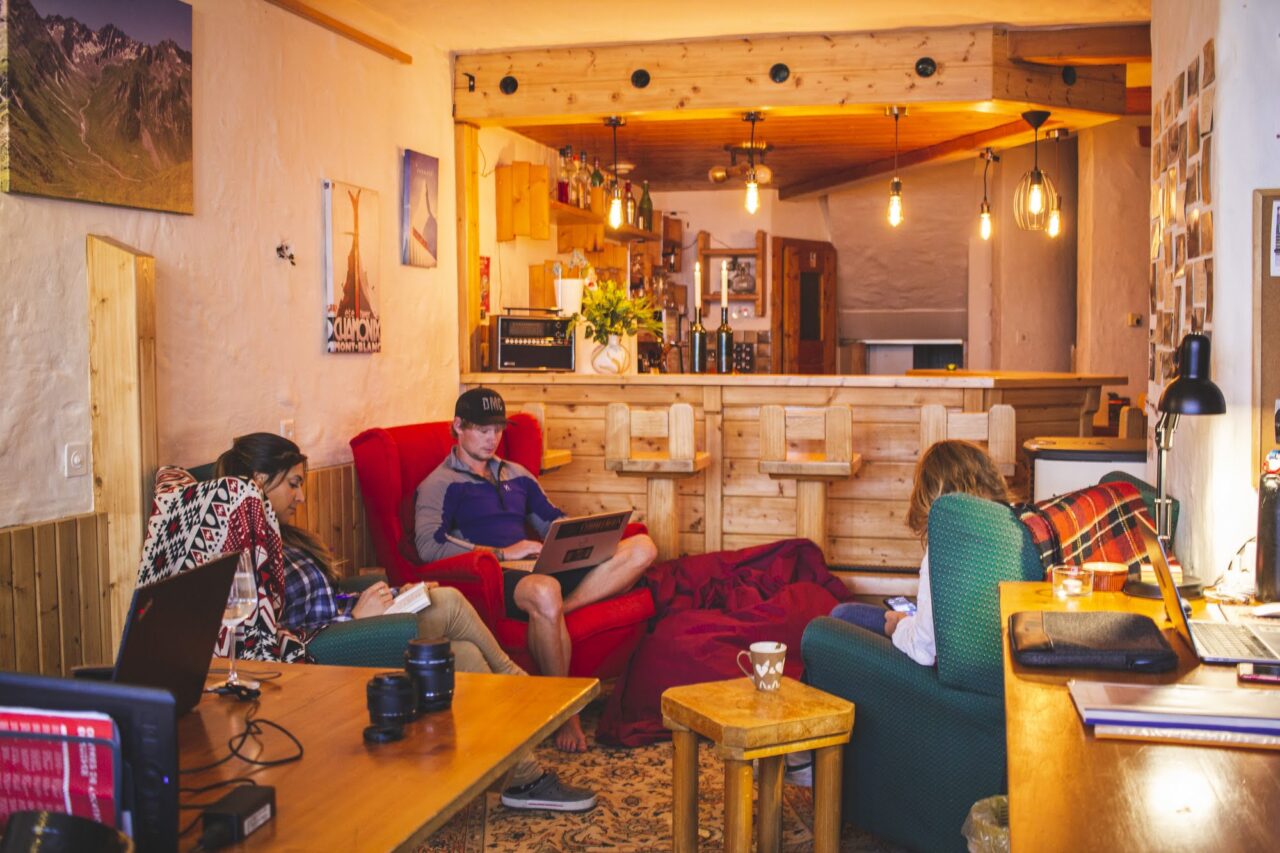
Coliving describes the accommodation and community model. Many colivings Europe are therefore perfect environments for a Workation because they combine accommodation, workspace and social life.
If you’re new to this model, read our complete guide to what coliving is for Digital Nomads, including how to find a coliving, what to consider before booking and how community management works.
A coworking trip is generally more organized and group-oriented, with predefined dates and often a structured programme.
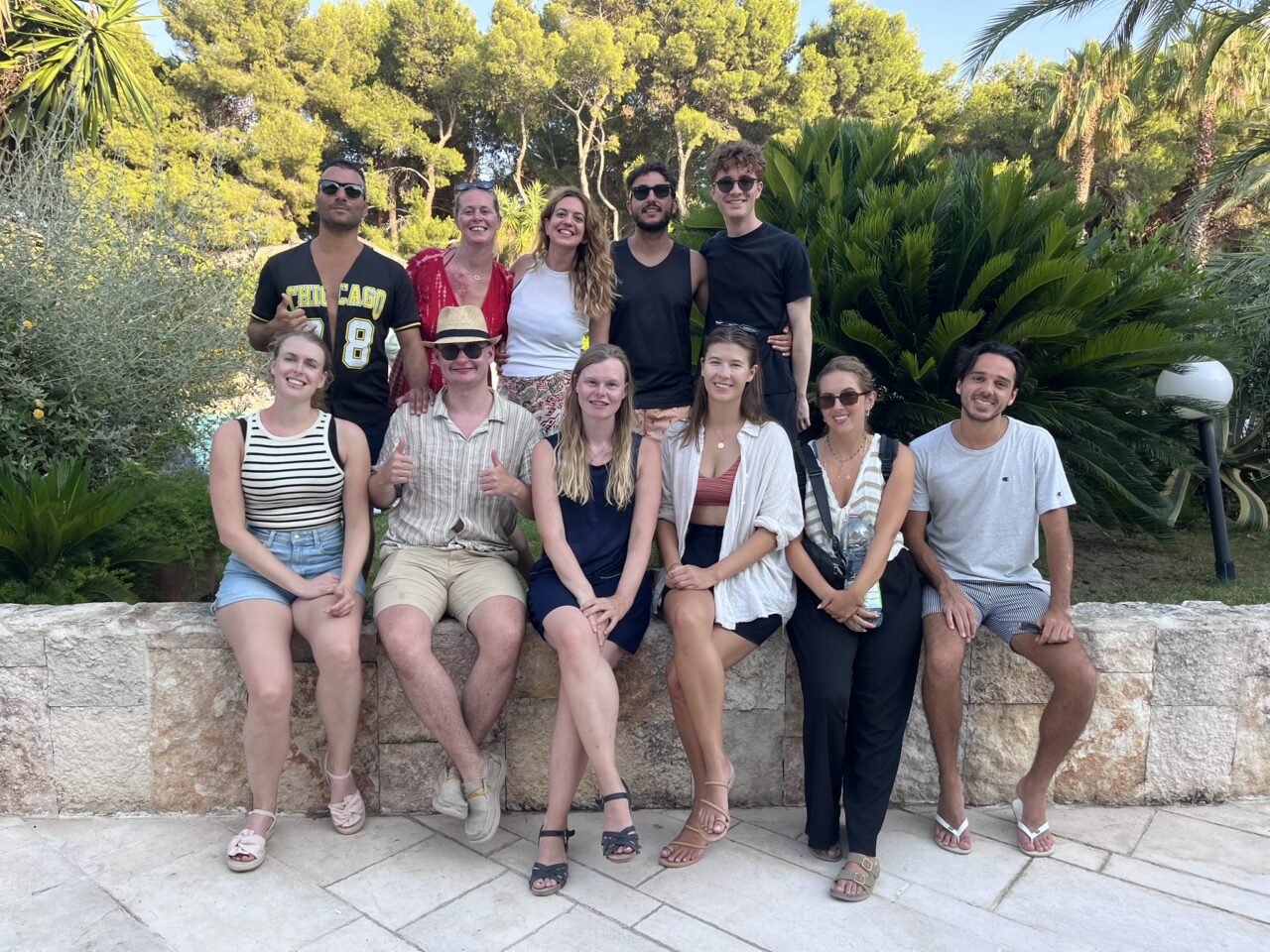
Then there are Pop Up Colivings, the format we frequently use at Tursi Digital Nomads: temporary communities created in a destination for a limited period, usually around three weeks. We explored the differences in more detail in our comparison of Pop Up Coliving vs Permanent Coliving, including community, duration, flexibility and local immersion.
The best format depends on how much independence, community and organization you want.
Short-Term vs Medium-Term Workation
Duration can completely change the experience.
A short Workation, usually around one week, is easy to fit around professional commitments and works particularly well for remote employees who want to experiment with working abroad.
The disadvantage is that one week can disappear quickly. Once you settle in, understand the destination and meet people, it is almost time to leave.
A medium-term Workation of two to four weeks creates a different dynamic.
This is why many of our communities at Tursi Digital Nomads last approximately three weeks.
You have enough time to establish a normal working routine while still having multiple weekends to explore. Relationships also have time to develop naturally rather than being compressed into a few days.
For us, around three weeks represents an excellent balance between travel, work and community.
Longer stays of one to three months move closer to traditional digital nomadism and can make sense for people with complete location independence.
What Should You Consider Before Booking a Workation?
Start with your work, not with the destination.
Beautiful beaches become irrelevant very quickly if your internet connection drops during an important meeting.
Check WiFi speed, coworking facilities and whether there are quiet spaces for calls. If you work with colleagues in another time zone, verify whether the workspace remains accessible when you need it.
Then consider accommodation.
A private room can become important during a three-week stay even if you normally enjoy hostels while travelling. Ask whether utilities, cleaning, coworking and activities are included in the price.
Transportation matters too.
Can you reach the destination easily? Can you live there without a car? Are restaurants and supermarkets within walking distance? If the destination is rural, are transfers or shared transportation available?
Finally, investigate the community.
A beautiful property doesn’t guarantee a great Workation. If meeting people matters to you, ask how many participants will be there, their typical age range and whether someone actively manages the community.
How to Find a Workation in Europe
There are several ways to search for a Workation in Europe.
Platforms specializing in coliving are often a good starting point. Coliving.com provides a large directory of coliving properties around the world, while Mapmelon is particularly useful for discovering communities geographically.
Platforms and communities focused on remote work can also help identify destinations before choosing accommodation. Nomad Stays, for example, is useful for comparing cities according to factors relevant to remote workers.
Google remains one of the most effective tools. Search for terms such as “Workation Italy”, “Workation Greece”, “rural coliving Europe” or “remote work community + destination.”
Social media should be part of your research too.
Instagram shows what daily life inside a community actually looks like, while Facebook groups, Reddit and communities for digital nomads in Europe can provide first-hand recommendations.
Don’t look only at bedrooms and swimming pools. Look for evidence of actual community.
Why Italy Is Perfect for a Workation
Italy provides an extraordinary variety of experiences within one country.
You can work from Milan and build professional connections, spend a month in Tuscany, live near the sea in Puglia or Sicily, or choose a small village in Basilicata where international remote workers are still unusual.
Food and culture are part of everyday life rather than something reserved for weekends.
Transportation between major cities is excellent thanks to high-speed trains, while smaller destinations provide a slower experience and often significantly lower accommodation costs.
Italy is particularly interesting for people who want their Workation to extend beyond an international remote-work bubble. In smaller destinations, the local community can become part of the experience.
f you’re still deciding where to go, our guide to the best cities in Italy for Digital Nomads compares destinations including Milan, Florence, Rome, Bologna, Bari, Matera and the villages of Basilicata
Workation in Tursi: Remote Work Inside a Southern Italian Village
Tursi, in Basilicata, is where our story started.
Instead of creating a conventional resort for remote workers, we use the town itself as part of the experience.
Participants stay in accommodation distributed around Tursi, work together from our coworking space in a former monastery and spend several weeks living alongside the local community.
Dinners, local wine, outdoor experiences, workshops and spontaneous moments in the village become part of everyday life.
Tursi is also an example of how remote-work communities can generate value beyond the people participating in them. We explored the impact of Digital Nomads in Italy on rural villages, including local spending, property reactivation, international visibility and social impact
For digital nomads in Europe who have already experienced major hubs such as Lisbon or Barcelona, Tursi offers almost the opposite proposition: fewer international tourists, slower rhythms and considerably deeper interaction with the destination.
From Rotondella and Matera to Patù: Workations Across Southern Italy
Over time, our communities expanded beyond Tursi.
In Rotondella, another small town in Basilicata, we experimented with the same principle of bringing remote workers into a rural community.
Matera offers a completely different setting. Its internationally famous Sassi and cultural heritage provide the atmosphere of a globally recognized destination while maintaining a strong connection with Southern Italy.
Further south, Patù in Puglia combines village life with proximity to the coast of Salento.
These destinations demonstrate why Italy works so well for this format.
A Workation does not need one standardized environment. Within a relatively small geographical area, remote workers can experience historic cities, inland villages and Mediterranean coastal life.
Why Greece Is One of the Best Workation Destinations in Europe
Greece shares many of Italy’s advantages but creates a completely different experience.
The climate allows for a long season, food is central to social life and many destinations combine small communities with extraordinary access to nature and the sea.
Most international remote workers immediately think about Athens, Crete or the Greek islands.
But smaller mainland destinations can be even more interesting for a community-based Workation in Europe.
They often have strong tourism infrastructure but become significantly quieter outside July and August.
This creates an opportunity for remote workers to experience them when local businesses have capacity and accommodation becomes more accessible.
Parga: Working Remotely by the Ionian Sea
Parga, on Greece’s northwestern coast, provides a strong example.
During summer, it is a popular tourism destination. Outside peak season, the rhythm changes considerably.
A Workation community can use that shoulder season differently.
Participants can work during the day and explore beaches, local restaurants, hiking routes and nearby destinations outside working hours.
For the territory, remote workers can also extend demand beyond traditional holiday periods.
This relationship between remote work and seasonality is one reason we believe Workations can become interesting not only for participants, but for destinations too.
Dimitsana: A Different Side of Greece
Dimitsana provides almost the opposite Greek experience.
Located in mountainous Arcadia, it replaces beaches with stone architecture, mountains, hiking and village life.
That contrast matters.
The growth of colivings Europe and remote-work communities is demonstrating that digital nomads don’t necessarily need tropical beaches or major cities.
A reliable workspace, interesting surroundings and a strong community can make a mountain village just as attractive.
Dimitsana shows how a Workation can also become a tool for discovering parts of Greece that conventional international remote workers might otherwise overlook.
Tenerife: Island Life and an Established Remote-Work Ecosystem
Not every Workation needs to be rural.
Tenerife has developed one of Europe’s most established remote-work ecosystems, combining warm weather, nature, beaches and a significant international community.
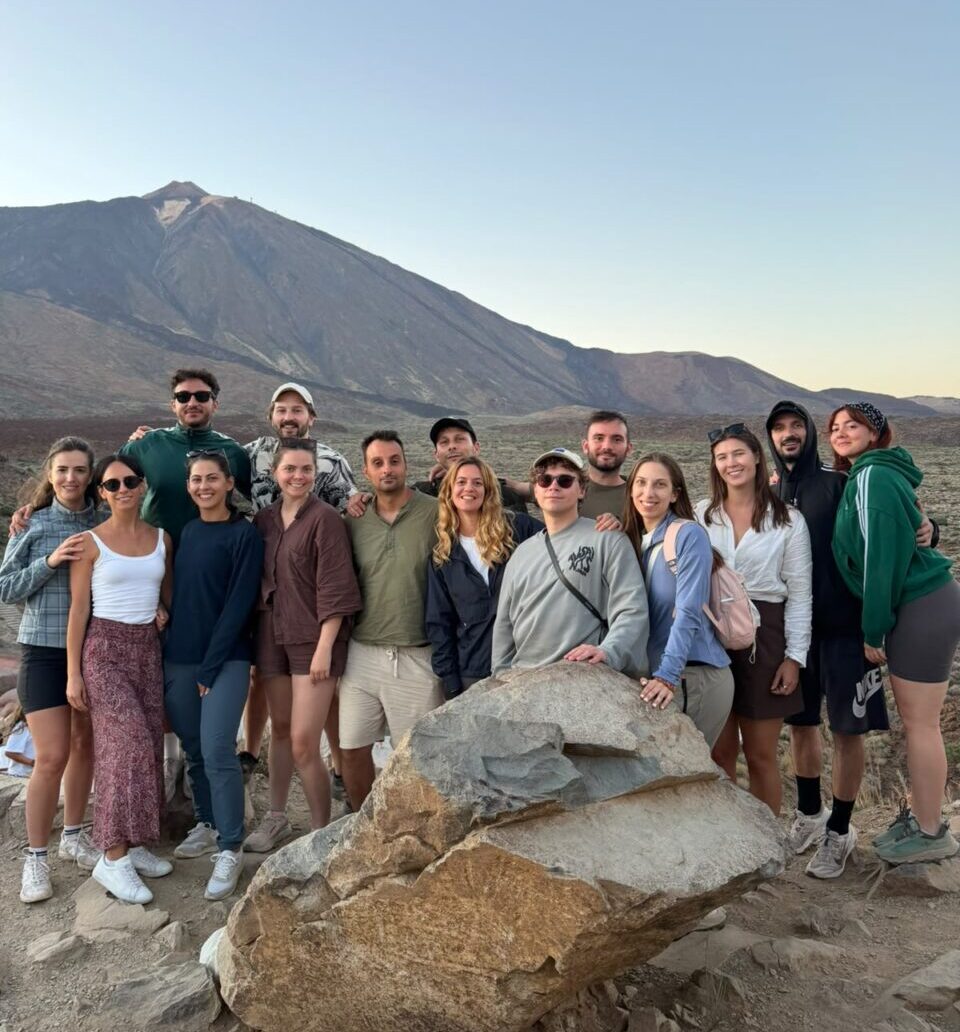
Our Tenerife experiences provide another format: bringing together people already connected through previous communities and using the destination as a base for working, reconnecting and exploring.
For digital nomads in Europe, the Canary Islands remain attractive because they provide European infrastructure with a climate that supports outdoor living throughout much of the year.
The Best Activities During a Workation
The best activities are not necessarily the biggest ones.
If participants are working full-time, scheduling an excursion every afternoon quickly becomes exhausting.
Instead, activities should fit around normal life.
Community dinners are probably the simplest and most effective format. Cooking together, sharing an aperitivo or organizing an international potluck creates interaction without making people feel as though they are attending another networking event.
Outdoor activities are ideal for weekends: hiking, kayaking, boat trips, cycling and beach days depending on the destination.
Local experiences make the Workation more meaningful. Cooking workshops, wine tastings, visits to local producers, craft workshops and cultural events connect participants with the territory rather than keeping them inside a digital nomad bubble.
Professional activities can also emerge organically.
Skill-sharing sessions, workshops and informal talks allow participants to exchange expertise in marketing, software development, AI, entrepreneurship, design or other areas.
The important principle is simple: activities should create opportunities, not obligations.
When Is the Best Time for a Workation in Italy and Greece?
For both countries, shoulder season is particularly attractive.
Spring and early summer, roughly April to June, combine good weather with fewer visitors. September and October offer similar advantages after peak summer.
These periods can also provide better accommodation availability and lower prices.
For rural destinations, timing has another dimension.
Bringing remote workers outside traditional tourist peaks can create economic activity during periods when accommodation and local businesses have spare capacity.
A successful Workation in Europe can therefore be designed around the needs of both participants and the destination.
How Much Does a Workation Cost?
There is no standard price.
Your total budget depends on destination, accommodation type, duration and how much is included.
A self-organized Workation might appear cheaper because you book accommodation independently. But remember to include coworking, utilities, transportation, activities and the time required to build your own social network.
Organized experiences and colivings Europe may have a higher initial price while bundling accommodation, workspace, community management and activities.
Pricing at Tursi Digital Nomads vary from 500€ to 1.300€ for a 3 week workation, based on location and season.
For Italy specifically, we have also created a guide to finding Affordable Coliving in Italy, including why destinations such as Tursi and Basilicata can offer an alternative to the country’s most expensive cities.
Rather than comparing room prices alone, calculate the total cost of the experience because Southern Italy and smaller Greek destinations can be particularly attractive because everyday costs and accommodation can be considerably lower than Europe’s largest remote-work hubs.
Is a Workation Worth It?
A Workation isn’t a holiday with occasional emails.
And it shouldn’t be three weeks of work with a prettier background either.
The best experiences create a genuine balance between professional routine, community and discovery.
For some people, that means joining one of the established colivings Europe. For others, it means independently renting an apartment in a new city. And for those looking for deeper community, a temporary group experience can provide the structure that independent travel often lacks.
Italy and Greece are particularly suited to this model because they offer enormous diversity within relatively small distances: cities, mountains, historic villages, islands and coastlines, combined with cultures where food and social interaction remain central to everyday life.
From Tursi, Rotondella and Matera to Patù, Parga and Dimitsana, our experience has shown us that the most memorable Workations aren’t necessarily in the most famous destinations.
They happen where work remains possible, travel becomes slower and strangers have enough time to become a community.
And perhaps that is the real point of a Workation:
not escaping your everyday life, but discovering that your everyday life can happen somewhere completely different.