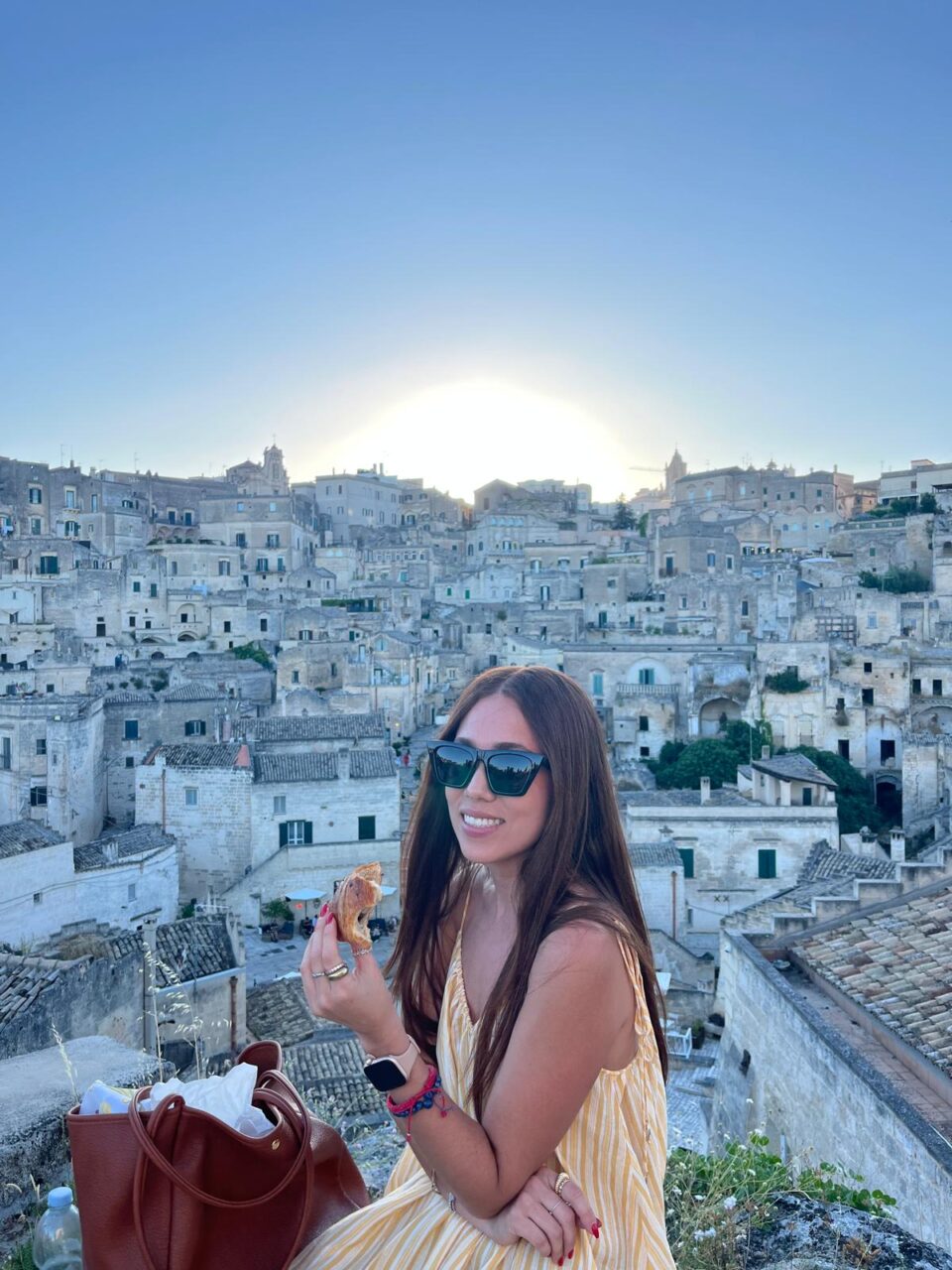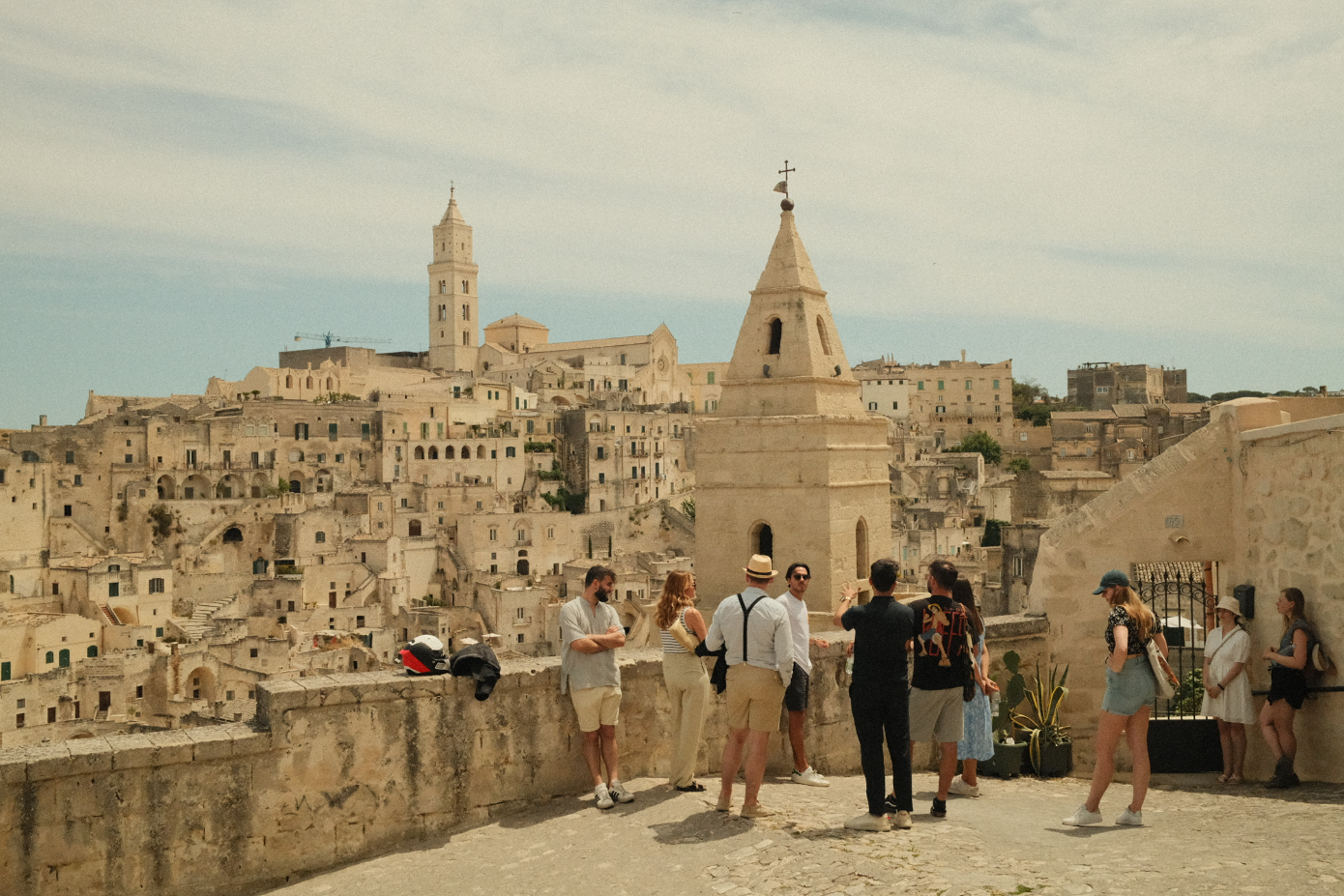

What if the future of small villages depended not only on bringing back the people who left, but also on attracting new people who can live and work from anywhere?
Across Europe, thousands of rural communities are facing similar challenges: depopulation, ageing populations, empty properties, declining local businesses and limited opportunities for younger generations.
At the same time, remote work has created a new generation of professionals who are no longer tied to a particular city or office.
A Digital Nomads Village brings these two realities together.
Instead of concentrating digital nomads in major cities and established tourism destinations, the model encourages remote workers to spend several weeks or months living in small towns, using local accommodation, coworking spaces and services while becoming temporary members of the community.
At Tursi Digital Nomads, we have been developing this approach since 2021, starting in Tursi, a small town in Basilicata, Southern Italy, and gradually expanding our communities to other destinations in Italy and Greece.
Our experience suggests that a Digital Nomads Village can become much more than an alternative travel destination. With the right infrastructure, partnerships and community management, it can become a practical tool for rural regeneration.
What Is a Digital Nomads Village?
A Digital Nomads Village is a small town or rural destination that welcomes remote professionals for extended stays, providing the infrastructure and community needed to live and work there.
Unlike a traditional tourism destination, a Digital Nomads Village is not primarily designed around short visits.
Participants typically remain for several weeks, continue working during weekdays and gradually become familiar with local residents, businesses and everyday life.
The model usually combines accommodation in existing properties, reliable internet, coworking facilities, community management and activities involving local people.
Importantly, it does not necessarily require a large coliving building or major real estate investment.
In our experience, the village itself can become the coliving.
Remote workers stay in apartments distributed throughout the historic centre, work together in a shared space and interact with local businesses during their daily routines.
This approach creates opportunities for economic activity to spread across the destination rather than remaining concentrated inside a single accommodation facility.
If you are unfamiliar with this way of living, our guide to what coliving is for Digital Nomads explains how shared accommodation, community management and coworking come together to create meaningful experiences for remote professionals.
Why Rural Areas Need New Regeneration Models
Many rural areas across Europe have spent decades struggling with structural challenges.
Young residents leave to study or work in larger cities. As populations decline, shops close, houses remain empty and public spaces gradually lose their social function.
Traditional tourism can help, but it is not always enough.
Some villages are too far from major attractions to generate significant visitor numbers. Others experience intense tourism for a few summer weeks and very little activity during the rest of the year.
A Digital Nomads Village introduces a different type of visitor: someone who does not need to be on holiday to stay in the destination.
Remote workers bring their existing jobs and income with them.
They do not necessarily require local employers to create new positions before they arrive. What they need is a place where they can work effectively, live comfortably and build relationships.
This creates an opportunity for villages that may lack traditional employment opportunities but already possess valuable assets: historic buildings, affordable housing, natural landscapes, local traditions and strong community identities.
The Economic Impact of a Digital Nomads Village
One of the most immediate benefits of a Digital Nomads Village is the additional economic activity generated by longer stays.
A conventional tourist might spend two nights in a destination, visit its main attractions and leave.
A remote worker staying for three or four weeks develops a completely different spending pattern.
They rent accommodation, shop for groceries, visit cafés, eat at local restaurants, use transportation services and participate in activities organized by local professionals.
The difference is not simply the amount spent in one day. It is the continuity of that spending over several weeks.
From Tourism Revenue to Everyday Economic Activity
Imagine a community of 25 remote workers staying in a village for three weeks.
If each participant spends an average of €1,000 locally during that period, the community generates €25,000 in direct expenditure.
That money can reach accommodation providers, restaurants, supermarkets, cafés, transportation operators and local experience providers.
This is an illustrative scenario rather than a measured outcome, but it demonstrates why even relatively small communities can matter in places with limited economic activity.
The objective should not be to attract thousands of visitors at once.
It should be to create consistent demand that supports existing businesses and encourages new ones to develop.
Our Experience in Tursi and Beyond
Since 2021, Tursi Digital Nomads has welcomed more than 500 participants from over 50 countries through its communities and experiences.
Across our wider project ecosystem, we estimate that these activities have contributed more than €300,000 to accommodation providers and €600,000 to local businesses and services.
These are cumulative project impact estimates, not the results of a single village or one event.
They nevertheless illustrate how repeated communities can generate meaningful economic opportunities, particularly when spending is intentionally directed towards local providers.
We explored these results in greater detail in our article about the impact of Digital Nomads in Italy on rural villages, including local spending, property reactivation, international visibility and social impact.
Real Estate Regeneration: Giving Empty Houses a New Purpose
Depopulation often leaves a visible mark on rural towns.
Historic centres contain properties that are vacant, inherited by families living elsewhere or used only for a few weeks each year.
These buildings represent an enormous underused resource.
A Digital Nomads Village in Italy can create new demand for properties that would otherwise remain empty.
Instead of constructing new accommodation facilities, the model can work with existing property owners to make houses suitable for medium-term stays.
This may involve installing reliable internet, improving furniture, upgrading heating or air conditioning and creating functional workspaces.
For property owners, it creates an additional income opportunity.
For the village, it can encourage the maintenance and gradual reactivation of buildings that might otherwise deteriorate.
In the Tursi Digital Nomads ecosystem, we have worked with more than 50 property owners and helped bring eight previously underused properties back into active use.
This is particularly relevant for small historic towns where preserving existing buildings is often more appropriate than developing entirely new tourism infrastructure.
A Digital Nomads Village can turn existing housing into productive infrastructure without changing the identity of the place.
However, this model must be managed carefully. Growth should prioritize vacant or underused properties rather than displacing residents or reducing the availability of affordable long-term housing.
International Visibility: Putting Small Villages on the Map
Many small European villages have extraordinary cultural and natural assets but very limited international recognition.
They may have beautiful historic centres, traditional cuisine, interesting local producers and remarkable landscapes.
The problem is not always a lack of attractions.
Sometimes it is simply that international visitors have never heard of them.
A Digital Nomads Village can help change that.
Remote workers often have international professional and social networks. During their stay, they share photographs, videos, recommendations and personal stories about destinations that might otherwise receive little attention.
A participant from Germany may introduce Tursi to colleagues in Berlin. A freelancer from the Netherlands might recommend Rotondella to friends considering a Workation in Southern Italy.
These interactions create visibility that goes beyond conventional destination marketing.
There is also an important difference between a promotional campaign and a personal recommendation.
When someone spends three weeks living in a village and genuinely enjoys the experience, their story can be particularly credible.
Over time, these individual experiences can contribute to building a new international identity for the destination.
Social Impact: Bringing International Communities Into Local Life
The social impact of a Digital Nomads Village is harder to quantify than accommodation revenue, but it can be equally important.
In small towns affected by depopulation, public spaces can gradually lose activity, particularly among younger generations.
The arrival of international remote workers creates opportunities for new interactions.
Local residents meet people from different countries and professional backgrounds. Remote workers discover traditions, lifestyles and perspectives they would rarely encounter in established digital nomad hotspots.
These exchanges can happen through organized activities, but some of the most meaningful moments are spontaneous.
A conversation at a café, a shared dinner, a local cooking workshop or a resident helping a newcomer navigate the village can become the beginning of a genuine relationship.
Why Professional Skills Matter
Digital nomads are not only consumers.
They are also professionals bringing skills, knowledge and international networks.
Among our participants, we have welcomed software developers, entrepreneurs, marketers, designers, consultants and freelancers working across different industries.
Their presence creates opportunities for skill-sharing workshops, professional exchanges, mentoring and collaboration with local entrepreneurs.
For young residents, meeting people who work remotely for international companies can also introduce professional possibilities that may previously have seemed distant.
Of course, these benefits are not automatic.
A successful Digital Nomads Village needs to actively create opportunities for interaction rather than allowing international visitors to remain inside an isolated community.
Digital Nomads Village in Italy: Tursi as a Rural Regeneration Laboratory
Tursi, in Basilicata, is where our project began.
Like many small towns in Southern Italy, it has experienced decades of young people moving away in search of education and employment.
At the same time, the town possesses valuable resources: a historic centre, distinctive landscapes, local traditions and properties that can accommodate temporary residents.
In 2021, we started exploring how remote work could connect these assets with a new international community.
Our approach was deliberately different from creating a conventional resort or isolated coliving property.
Participants stay in apartments distributed around the town and share a coworking space inside a former monastery.
During the day, they continue their professional activities. In the evenings and on weekends, they participate in local experiences and become part of the village’s social life.
Over time, Tursi has become a testing ground for a model combining remote work, distributed accommodation, community building and local development.
The project has also attracted institutional attention. The Regione Basilicata highlighted Tursi Digital Nomads as an example of how remote work can create new opportunities for the territory.
The most important lesson has been that the quality of the relationship between digital nomads and local residents matters more than the number of visitors alone.
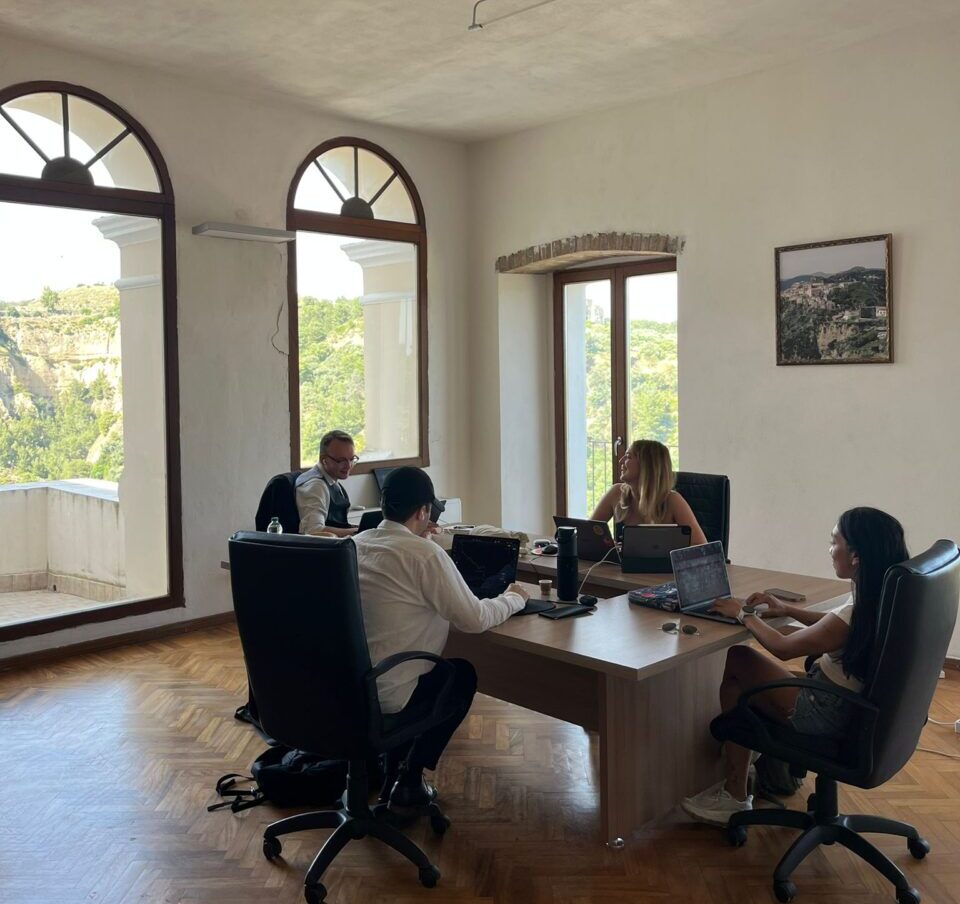
Rotondella: Replicating the Digital Nomads Village in Basilicata
After developing the model in Tursi, we wanted to understand whether it could work in another village.
Rotondella, also in Basilicata, offered an opportunity to test that question.
With its historic centre, surrounding countryside and proximity to the Ionian coast, Rotondella combines rural life with access to outdoor experiences.
We organized communities there in 2024 and 2025, bringing international remote workers to live and work in the village.
The programme combined accommodation, coworking and activities involving the surrounding territory, from local food experiences to outdoor excursions.
Rotondella demonstrated an important principle: a Digital Nomads Village does not have to reproduce the exact characteristics of Tursi. Every destination has different strengths.
The objective is to build a model around those strengths while maintaining the essential ingredients: accommodation, workspace, community and local involvement.
This flexibility is what makes the approach potentially replicable across other small towns in Italy.
Digital Nomads Village in Greece: Extending the Model Beyond Italy
The challenges facing rural Italy are not unique. Across Greece, many smaller communities experience population decline, limited economic diversification and strong dependence on seasonal tourism.
This makes Greece another interesting environment for experimenting with the Digital Nomads Village model.
Through our projects in Parga and the mountainous Peloponnese, we have explored two very different applications.
One focuses on extending the economic season of an established tourism destination.
The other explores the potential of remote work in a small mountain community.
Parga: Extending Tourism Beyond the Summer Season
Parga is a beautiful coastal destination in northwestern Greece, known for its beaches, colourful waterfront and tourism economy.
Unlike Tursi or Rotondella, Parga already attracts significant numbers of international visitors.
Its challenge is therefore different. During the summer, the destination is busy with tourists. Outside the main season, visitor numbers decline and many tourism-related businesses experience reduced demand.
A Digital Nomads Village in Greece can help address this seasonality.
Our Parga communities bring remote workers during periods outside the peak summer months, when accommodation is more available and the destination becomes quieter.
Participants continue working during weekdays while enjoying local restaurants, coastal activities, cultural experiences and nearby destinations.
For accommodation providers, this can mean bookings during periods that would otherwise be less profitable.
For restaurants and activity providers, it creates additional customers beyond conventional holidaymakers.
For the destination, it offers an opportunity to diversify its tourism economy without relying exclusively on short summer stays.
In Parga, the value of the model is not attracting visitors to an unknown place. It is attracting a different type of visitor at a different time of year.
Dimitsana and Arcadia: Bringing Remote Workers to Mountain Greece
Our experience in the Peloponnese demonstrates another application of the model.
In September 2025, we collaborated with WORKFROMGREECE.GR on a remote-work community in mountainous Arcadia, based in the village of Raftis near Dimitsana.
The experience brought international remote professionals to the area for approximately two weeks, combining normal working days with outdoor activities and local experiences.
Unlike Parga, the attraction was not the Mediterranean coastline.
It was the landscape, mountain villages, traditional architecture, nature and slower pace of life.
The project demonstrated that a Digital Nomads Village in Greece does not need to be located on an island or in an established digital nomad destination.
Mountain communities can also provide attractive environments for remote professionals, particularly those interested in hiking, nature and a quieter lifestyle.
The initiative was also presented by Marketing Greece through its Remote in the Peloponnese programme, highlighting the potential of remote work to introduce international professionals to lesser-known Greek destinations.
For rural destinations, these experiences can help introduce new international audiences while creating opportunities for accommodation providers and local businesses.
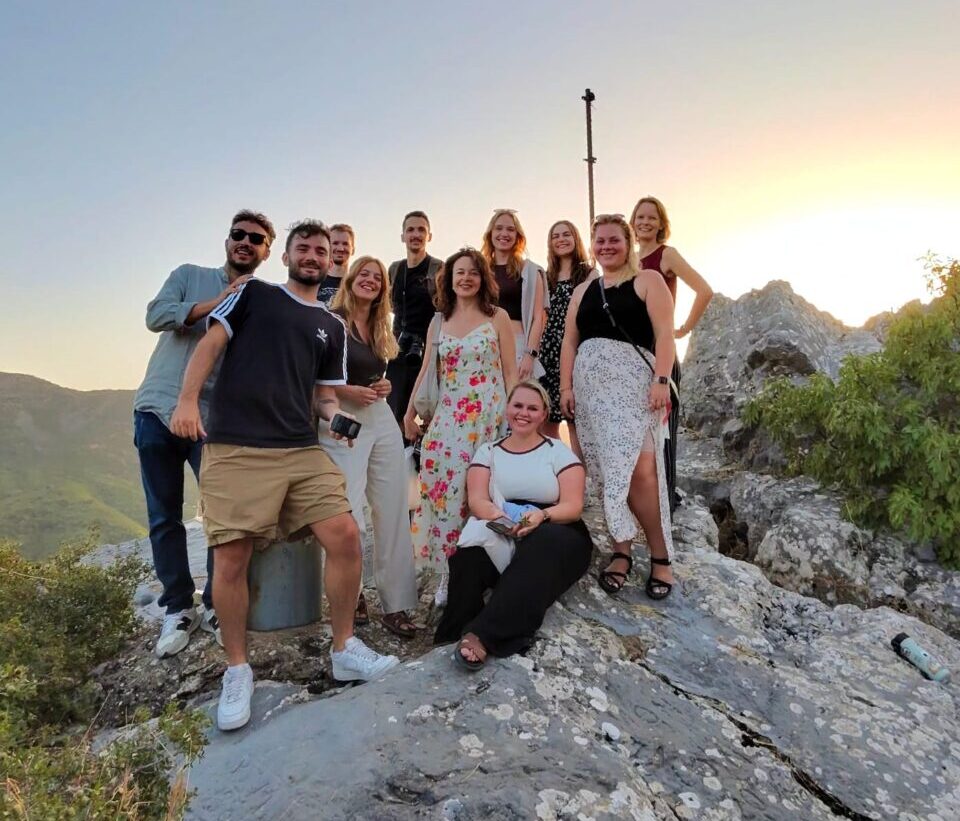
Why Staying for Several Weeks Makes a Difference
The duration of a stay is one of the most important elements of the Digital Nomads Village model.
A tourist visiting for two days usually experiences the destination through its main attractions.
A remote worker staying for three weeks begins to develop a routine.
They shop in the same stores, visit the same cafés, interact repeatedly with residents and discover places that do not appear in conventional travel guides.
These repeated interactions create opportunities for relationships that rarely develop during short visits.
They also distribute economic activity over a longer period.
Instead of concentrating spending into a weekend, remote workers contribute to everyday demand throughout their stay. This is one reason our preferred format often involves temporary communities lasting approximately three weeks.
We explain the advantages of this approach in our comparison of Pop Up Coliving vs Permanent Coliving, where we explore how duration, community and flexibility influence the experience.
Three weeks is often long enough to establish routines and meaningful relationships while remaining accessible to remote professionals who cannot relocate for several months.
What Does a Village Need to Become a Digital Nomads Village?
Not every small town is immediately ready to welcome remote workers.
Beautiful landscapes and affordable accommodation are important, but they are not sufficient.
Reliable internet and appropriate workspaces are essential. Participants must be able to maintain their professional responsibilities without compromising productivity.
Accommodation must also be comfortable and suitable for medium-term stays.
Accessibility matters, particularly in rural areas where public transportation can be limited.
But the most important factor is often local collaboration.
Municipalities, property owners, accommodation providers, restaurants, associations and residents need to understand the project and see how they can participate.
Community management is equally important.
Someone needs to coordinate participants, facilitate local experiences, address practical problems and build relationships between visitors and residents.
Without this work, a Digital Nomads Village risks becoming little more than a collection of short-term rentals.
The Challenges of Scaling Digital Nomads Villages
Despite its potential, the model has limitations.
Remote workers are not a solution to every structural problem affecting rural areas.
A village still needs accessible healthcare, transportation, public services, housing for residents and long-term employment opportunities.
Community programmes can also be difficult to sustain financially, particularly when participant numbers are small or demand is seasonal.
The quality of internet infrastructure varies between destinations, and property owners may need support to prepare their accommodation.
There is also a risk of building projects that serve international visitors without meaningfully benefiting the local population.
That is why regeneration should be measured through more than participant numbers.
Useful indicators include local spending, the number of businesses involved, properties reactivated, employment or service opportunities created, repeat visits and the level of interaction with local residents.
A Digital Nomads Village should complement broader local development strategies rather than replace them.
From Individual Villages to a Regional Network
Our next ambition is to move beyond isolated community experiences and develop a more connected regional model.
Basilicata offers an interesting opportunity.
The region contains numerous small towns with different identities, landscapes and cultural traditions, many of which face similar challenges around depopulation and economic development.
Rather than transforming every village into the same type of destination, we envision a network of communities with complementary identities.
Some could focus on nature and outdoor activities.
Others could attract entrepreneurs, technology professionals, creatives or people interested in local culture and craftsmanship.
A shared structure could coordinate international promotion, accommodation standards, community management, local partnerships and impact measurement.
This would allow smaller destinations to benefit from a wider network without losing their individual character.
It could also encourage remote workers to return to the region and explore different villages over time.
The long-term opportunity is not simply to organize more temporary communities.
It is to create an ecosystem where remote work becomes part of a broader strategy for regional development.
Can Digital Nomads Villages Really Regenerate Rural Areas?
A Digital Nomads Village cannot reverse decades of depopulation on its own.
It cannot replace schools, hospitals, public transportation or stable employment opportunities for local residents.
But it can activate resources that many rural communities already possess.
Empty houses can generate income again. Underused buildings can become coworking spaces. Local businesses can reach new customers. Small villages can gain international visibility, and residents can build relationships with professionals from around the world.
The experiences of Tursi, Rotondella, Parga and mountainous Arcadia show that the model can be adapted to different territorial needs.
In some places, the priority is bringing economic activity back to historic centres.
In others, it is extending the tourism season or introducing remote workers to destinations that remain outside traditional international travel routes.
What connects these experiences is a different way of thinking about mobility.
Digital nomads do not need to permanently relocate to contribute to a place. By living, working and participating in local life for several weeks, they can generate economic activity, new connections and opportunities that reach beyond their individual stay.
For us, that is the real potential of a Digital Nomads Village: using the freedom of remote work to help small communities make better use of their existing resources and build new opportunities for the future.